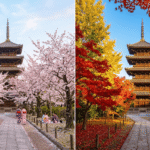

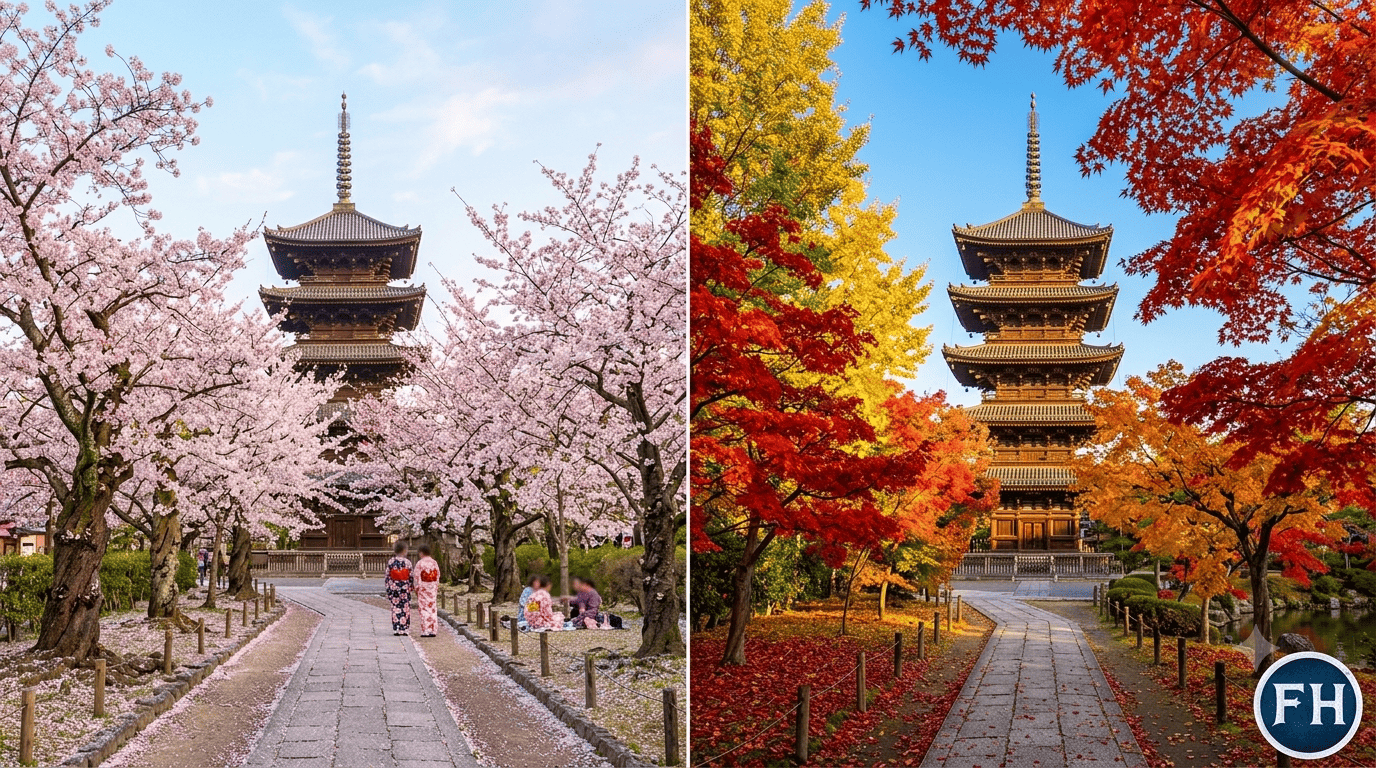
When planning a trip to Japan, two seasons reign supreme: Spring, when soft pink cherry blossoms blanket the country, and Autumn, when momiji maples transform ancient temples into fiery landscapes of red, gold, and orange.
Both seasons offer postcard-worthy scenery, pleasant weather, and incredible seasonal food—but they cater to entirely different travel styles, budgets, and schedules.
If you are torn between chasing sakura and admiring koyo (autumn foliage), this comprehensive comparison breakdown will help you pick the perfect window for your journey.
The Visual Spectacle & Timing
| Feature | Spring (Sakura Season) | Autumn (Koyo Season) |
| Peak Window | Late March – Early April | Mid-November – Early December |
| Atmosphere | Celebratory, delicate, vibrant | Serene, rich, reflective |
| Viewing Duration | Short (7–10 days per region) | Extended (4–6 weeks per region) |
| Crowd Levels | Extremely high | Moderate to High |
| Average Daylight Temp | 12°C – 18°C (53°F – 64°F) | 10°C – 17°C (50°F – 62°F) |
| Key Highlight | Outdoor Hanami picnics | Night illuminations & Onsen stays |
1. The Visual Spectacle & Timing Predictability
Spring (March to April)
There is nothing quite like spring in Japan. The entire country celebrates Hanami (flower viewing)—picnicking under blooming trees in public parks with seasonal snacks and sake.
The Catch: Cherry blossoms (Sakura) are notoriously fickle. They reach full bloom (mankai) within a week of opening and start shedding shortly after. A sudden rainy day can sweep away peak viewing in hours.
Autumn (October to December)
Autumn foliage (Koyo) moves slowly from north to south, starting in Hokkaido’s mountains in October and reaching central cities like Tokyo and Kyoto by late November to early December.
The Advantage: Autumn gives you a much wider target window. Leaves maintain their deep crimson and golden tones for nearly a month, giving you far more flexibility if your travel dates are rigid.
2. Weather & Packing Requirements
Spring
- Weather: Mild, crisp days with brisk morning and evening chill.
- Packing Essentials: Light layers, a stylish trench coat or light down jacket, comfortable walking shoes for park wandering, and an umbrella for occasional spring showers.
Autumn - Weather: Crisp, clear days with low humidity and high visibility—making it the single best season for viewing Mount Fuji.
- Packing Essentials: Warm layers, thermals for crisp evenings, cozy sweaters, and slip-on shoes for frequent visits to temple tatami mats.
3. Crowd Levels & Travel Costs
Spring - Spring is Japan’s ultimate peak travel season. Accommodation rates in major hubs like Kyoto, Tokyo, and Osaka skyrocket, and flight bookings require planning 6 to 9 months in advance. Iconic spots like Tokyo’s Meguro River or Kyoto’s Philosopher’s Path will be tightly packed.
Autumn - While peak foliage weeks in Kyoto (late November) bring significant visitor numbers, overall crowds across the country are slightly lower and more evenly spread out compared to the spring rush. Accommodations, while still requiring early reservation, often offer better overall value outside of specific peak weekends.
4. Seasonal Delicacies & Culinary Highlights
Spring Flavors - Sakura-Themed Treats: Cherry-blossom-flavored lattes, sakura mochi wrapped in salted cherry leaves, and seasonal bento boxes packed for picnics.
- Fresh Harvests: Takenoko (tender bamboo shoots), fresh strawberries, and sansai (mountain vegetables).
Autumn Flavors - Comfort Foods: Matsutake mushrooms, roasted satsumaimo (sweet potatoes), and grilled Pacific saury (sanma).
- Hearty Dining: Autumn is the premier season for Kaiseki multi-course dinners at traditional ryokans, alongside regional hot pots (nabe).
Suggested Itineraries.
🌸 7-Day Spring Highlights Route - Days 1–3 (Tokyo): Picnic at Shinjuku Gyoen, walk the glowing evening illuminations along Meguro River, and explore Rikugien Gardens.
- Day 4 (Fuji Five Lakes): Admire Chureito Pagoda framing Mount Fuji through a frame of pink blossoms.
- Days 5–7 (Kyoto): Stroll down Maruyama Park and take a flat-bottomed boat ride along the cherry-lined canals of Fushimi.
🍁 7-Day Autumn Highlights Route - Days 1–2 (Tokyo): Golden Ginkgo tree avenue at Meiji Jingu Gaien and an evening stroll through Koishikawa Korakuen.
- Days 3–4 (Hakone or Nikko): Crisp mountain air, lake cruises framed by fiery red maples, and a night soaking in a traditional open-air onsen.
- Days 5–7 (Kyoto): Nighttime illuminations at Eikan-do Temple, temple garden views at Tofuku-ji, and the bamboo and maple contrasts in Arashiyama.
Which Season Wins?
Choose Spring if: You want to experience Japan’s most iconic cultural celebration, love lively outdoor festivals, and don’t mind navigating larger crowds to catch a magical week of pink blossoms.
Choose Autumn if: You prefer stable weather, broader travel dates, breathtaking photography with long golden hours, and relaxing onsen retreats surrounded by fall foliage.
Which season are you planning your trip for? Let us know in the comments below, or drop your travel dates to get personalized spot recommendations!